Tuesday, 28 April 2020

Long-forgotten Viking mountain pass found in Norway following glacier melt

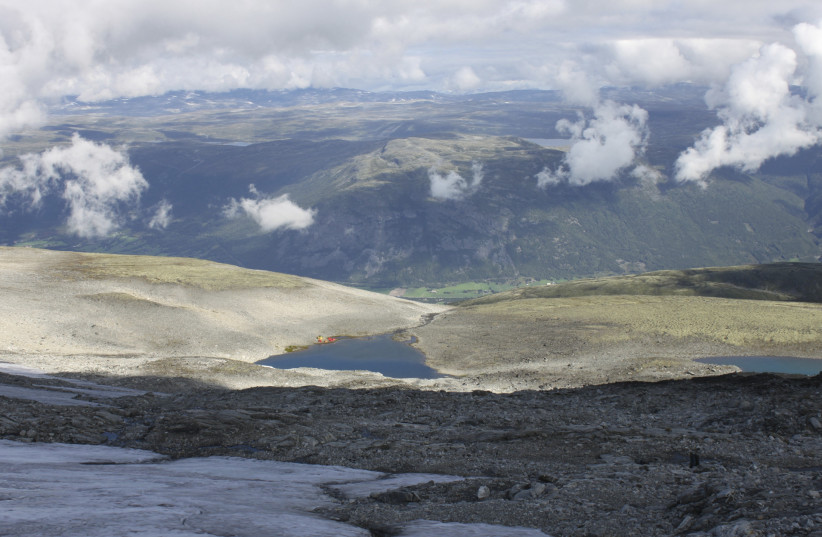
General view over valley in mountains of south Norway from beside Lendbreen glacier is seen in this undated handout picture
(photo credit: REUTERS)

Due to global warming, high-elevation ice patches and glaciers have recently yielded a myriad of historical finds for archaeologists to discover.

Archaeologists have uncovered a heavily traversed glacial mountain pass in Lendbreen, Norway, utilized by travelers throughout the Viking Age, and littered with hundreds of artifacts presumed to have been used by the Vikings during that time period, according to a new study published by the Cambridge University Press on Wednesday.
Due to the warming global climate, high-elevation ice patches and glaciers have recently yielded a myriad of historical finds for archaeologists to happen upon as they finally gain access to these areas after the layers of ice once covering them have gradually melted away over time – and much faster recently.

Read the rest of this article...

Melting glaciers reveal lost mountain pass and artifacts used by Vikings


The retreat of melting glaciers has revealed a lost mountain pass in Norway -- complete with hundreds of Viking artifacts strewn along it, according to a new study.

Researchers first discovered the pass in 2011 and have been examining it, and the artifacts that have been revealed as more ice melts, ever since. Dating the objects helped them reconstruct the timeline of when this pass was used and its purpose.
The new study published this week in the journal Antiquity.
In recent years, climate change has caused mountain glaciers to melt away, revealing well-preserved markers from different periods in history beneath. This is what happened in Lendbreen, Norway.

Read the rest of this article...

Monday, 27 April 2020

Could bringing Neanderthals back to life save the environment? The idea is not quite science fiction

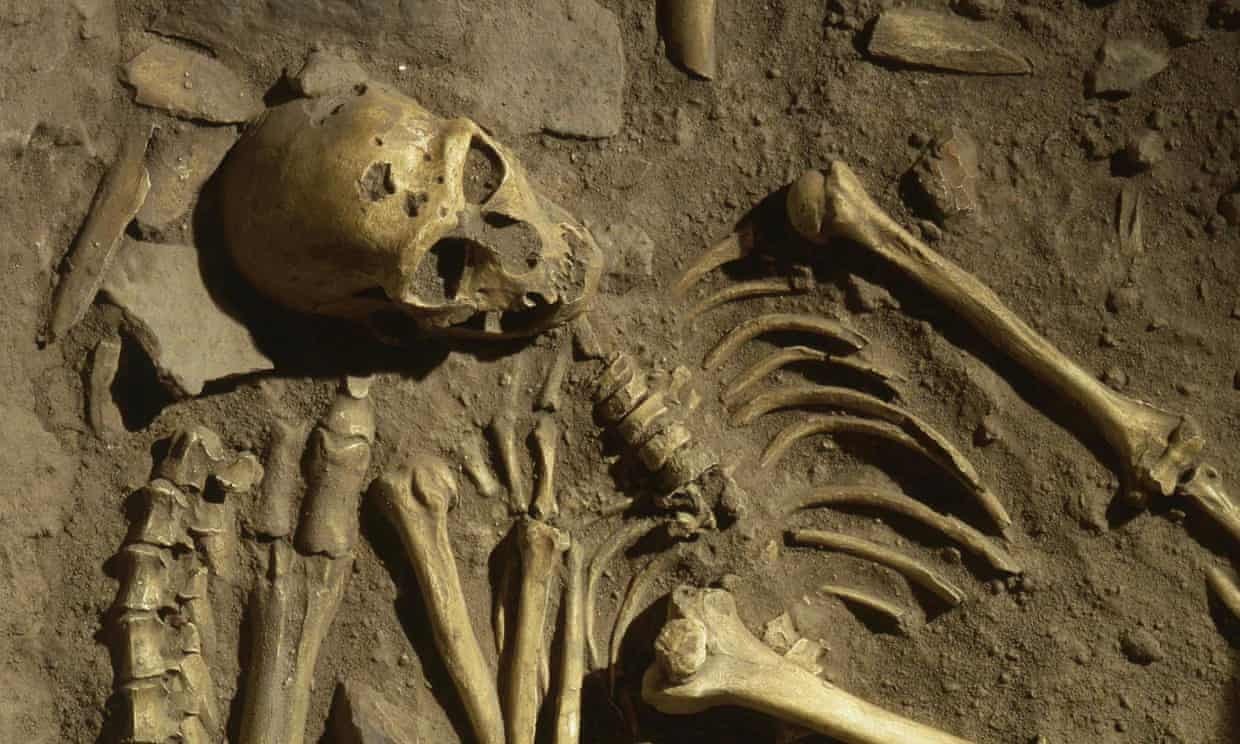
A Neanderthal tomb burial near the village of La Chapelle-aux-Saints in France. Author James Bradley asks: what would it mean if the deep past were to come to life? 
Photograph: The Art Archive/Alamy

The climate emergency is unsettling our future, and erasing what we thought was certain about the past

In 2015, flooding exposed the frozen bodies of two cave lion cubs in the Yakutia region of Russia. Members of a species that vanished at the end of the last Ice Age, the pair were buried approximately 12,000 years ago when the roof of their den collapsed and trapped them in the frozen ground. In photos, their faces are so well-preserved one might almost believe they are only sleeping.

Yet despite their unusually perfect condition, the cubs are not the only such relics to have appeared in recent years. Throughout the Arctic and subarctic, animals and artefacts buried for thousands of years are reappearing, liberated from their frozen graves by the rapid warming in the region. In the Alps and elsewhere, bodies of people lost for decades in the mountains are emerging from the ice as glaciers melt. In Australia, towns submerged for generations are resurfacing as dam levels fall due to drought and heat.

As British author Robert Macfarlane has observed, these uncanny emergences or “Anthropocene unburials” are part of a larger process of unsettlement and unhinging. As human time and geological time collapse into one another, the deep past is erupting into the present all around us with terrifying and uncanny consequences. What was fixed is now in flux, what was settled is being swept away faster than we can save it. Nor is it just the past that has become unstable. The climate emergency is unsettling our future as well, erasing what we thought was certain, what we thought we knew.

Read the rest of this article...
Sunday, 26 April 2020

Diverse livelihoods helped resilient Iron Age Levanluhta people survive a climate disaster

Levanluhta is among the most unique archaeological sites, even on a global scale. Bones belonging to nearly a hundred individuals who died in the Iron Age have been discovered in the middle of the Southern Ostrobothnia plains in western Finland since the 17th century. Today, three springs and their ferrous red water serve as reminders of this ancient burial site [Credit: Anna Wessman]

A multidisciplinary research group coordinated by the University of Helsinki dated the bones of dozens of Iron Age residents of the Levanluhta site in Finland, and studied the carbon and nitrogen stable isotope ratios. The results provide an overview of the dietary habits based on terrestrial, marine and freshwater ecosystems, as well as of sources of livelihoods throughout the Levanluhta era.

Ever since the 17th century, human bones have been emerging from the spring-containing lake burial site at Levanluhta in Southern Ostrobothnia, western Finland. The secrets of these Iron Age remains are now beginning to be revealed through measuring isotopes of atomic nuclei. A recently published study offers an overview of a diverse community that relied on an extremely broad range of livelihoods, which matches well with the understanding provided by archaeological discoveries.

The carbon and nitrogen in human food end up in the skeletal system and soft tissues as building blocks for the human body. There are three isotopes of carbon and two of nitrogen, and information pertaining to past events is recorded in the contents and ratios of these isotopes.

Read the rest of this article...
Thursday, 23 April 2020

The 7 mysterious ‘lost towns’ of East Anglia

The remains of Dunwich's Greyfriars Picture: Phil Morley

Discover the settlements that time forgot - and then remembered again thanks to the power of archaeology

It’s well-known that the region of East Anglia is steeped in a deep and fascinating history. Home to an array of ancient ruins and deserted settlements, the area has been graced by the footsteps of many – including the Romans, Anglo-Saxons and the Iceni tribe.

We spoke to Dr Andrew Rogerson, former senior archaeologist at Norfolk Historic Environment Service, who helped us delve deeper into some of the towns and villages that have been ‘lost’ to time – and brought back to life once again thanks to the wonders of archaeological exploration. Dr Rogerson said: “None of these places have been ‘rediscovered’ – they have never really gone away. Until the 1950s, very little attention was paid to the archaeology of medieval, as opposed to prehistoric and Roman settlements.”

Read the rest of this article...

Wednesday, 22 April 2020

Melting Ice Exposes Mountain Pass Used by Vikings, Including Ancient Dog and Leash

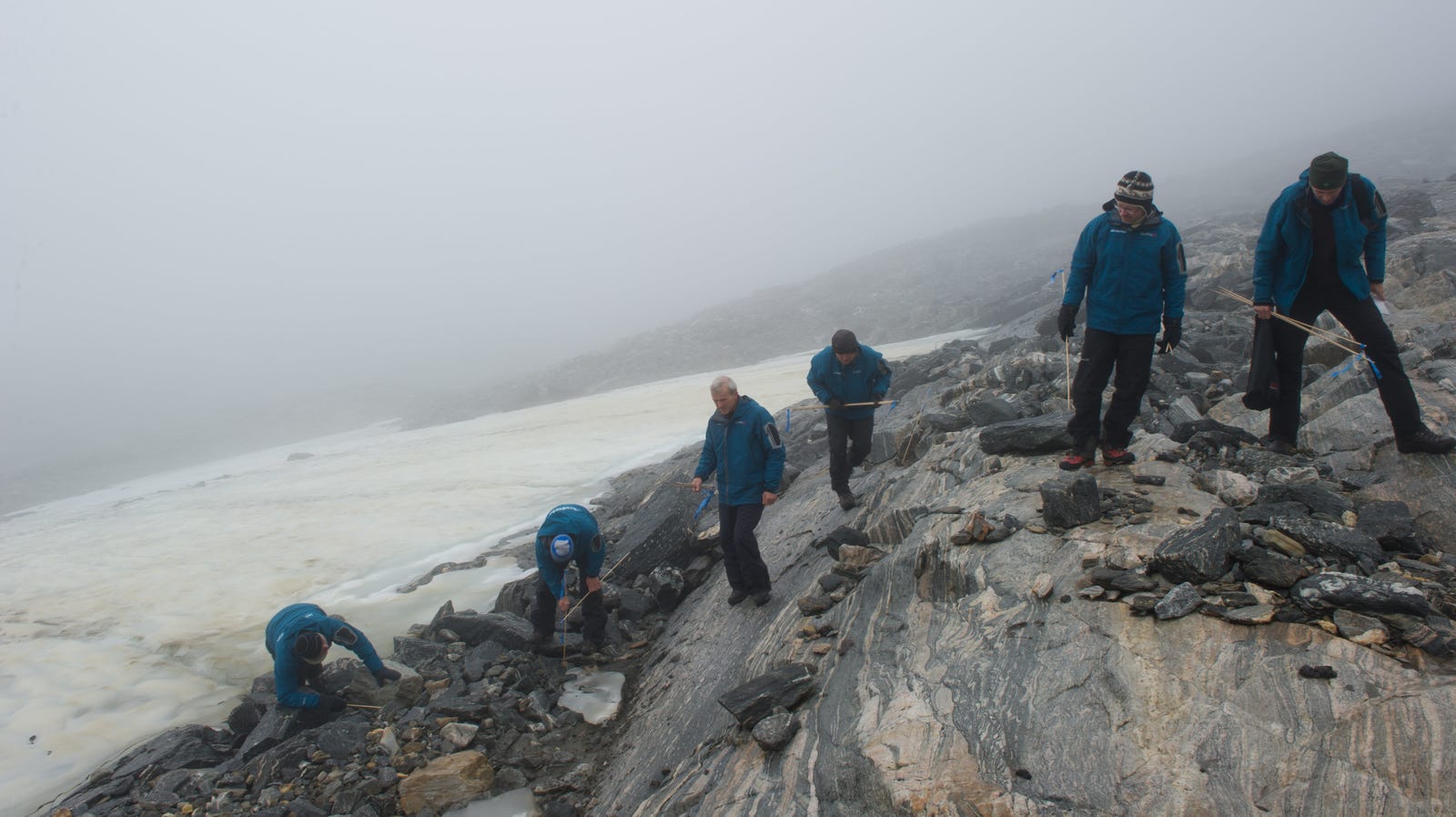
Glacial archaeologists performing fieldwork at Lendbreen, Norway.
Image: L. Pilø et al., 2020/Antiquity

Archaeologists in central Norway have uncovered evidence of a heavily traveled mountain passageway that was used during the Viking Age. Hundreds of beautifully preserved items were found atop a melting glacier, in a discovery that was, sadly, made possible by global warming.

New research published today in Antiquity describes a forgotten mountain pass at Lendbreen, Norway, that was in use from the Iron Age through to the European medieval period.

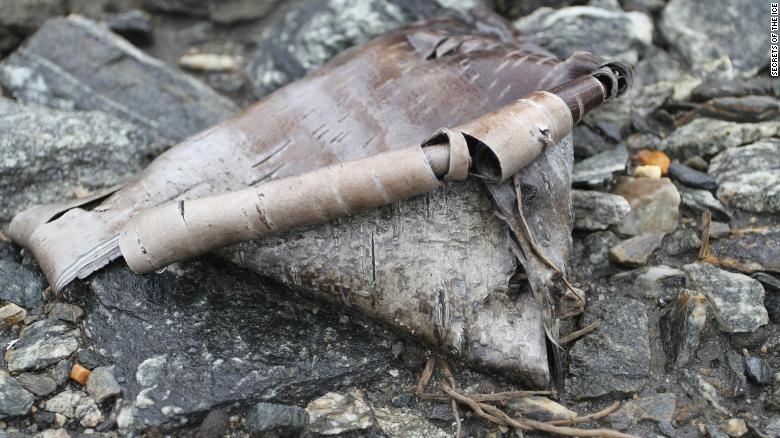
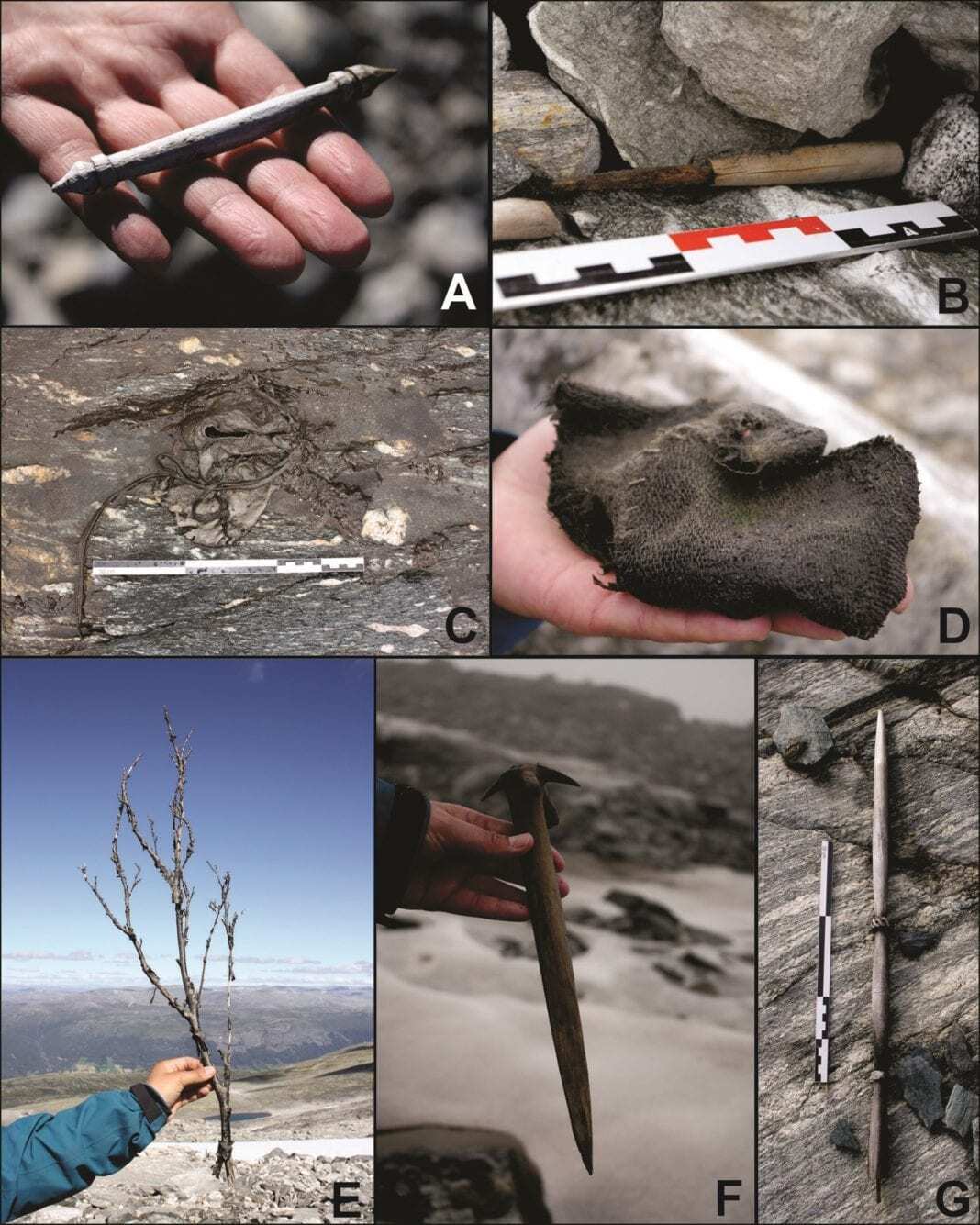
Located on Lomseggen Ridge, the passageway is absolutely littered with well-preserved artifacts, including mittens, shoes, horse snowshoes, bits of sleds, and even the remains of a dog still attached to its collar and leash. Radiocarbon dating of these artifacts is painting a picture of how and when this pivotal mountain pass was used, and its importance to both local and outside communities.

Read the rest of this article...

Melting ice reveals lost viking artefacts on mountain pass

Image Credit : Antiquity Journal

Climate change is leading to the retreat of mountain glaciers.
In Norway, hundreds of rare archaeological finds have been revealed by melting ice in a lost mountain pass at Lendbreen in Innlandet County.

The finds tell a remarkable story of high-altitude travel in the Roman Iron Age and the Viking Age.

“A lost mountain pass melting out of the ice is a dream discovery for us glacial archaeologists,” says Lars Pilo, first author of the study and co-director for the Glacier Archaeology Program.

“In such passes, travellers lost many artefacts that became frozen in time by the ice. These incredibly well-preserved artefacts of organic materials have great historical value.”

Read the rest of this article...